6 min read
How Celebrity Interviews Are Planned and Conducted
Ever wonder why celebrity interviews feel so polished? Here's what happens behind the scenes before a single question gets asked.
When you watch a celebrity chat with a talk show host or read a magazine profile, it looks effortless. A few friendly questions, some laughs, maybe a tear or two, and that's it. In reality, almost every public interview you see has been shaped by weeks of planning, negotiation, and careful strategy long before anyone sits down in front of a camera or recorder.
Understanding how these conversations come together helps explain why some interviews feel so guarded while others seem surprisingly open. It also says a lot about how the entertainment industry manages its biggest names.
01
Who Actually Starts the Process
Celebrity interviews rarely happen because a journalist simply asks and a star says yes. Most requests start with a specific reason behind them. A new film is coming out, an album is dropping, a brand partnership needs promotion, or someone wants to get ahead of a story before it spreads in a less flattering form.
The request usually goes through a publicist, who acts as the gatekeeper between the celebrity and the outside world. In many cases, the celebrity's talent agency is also involved, especially if the interview ties into a larger promotional push. If you want a deeper look at how these professional relationships work, our guide on talent management and agencies breaks down who does what.
02
The Pitch and the Publicist Negotiation
Journalists and producers don't just ask for an interview. They pitch one. This pitch usually includes the angle of the story, the publication or show it will appear on, the expected length, and sometimes even a rough idea of the tone.
From there, the back and forth begins. A publicist might push back on certain topics, ask for a specific interviewer, or request final approval over photos used alongside the piece. Bigger stars with larger teams often have more leverage here, while newer talent may have less room to negotiate.
This stage can take anywhere from a few days to several weeks, particularly for major print features or long-form television interviews. Smaller outlets or quick promotional chats tend to move faster, since they involve less risk and less exposure.
03
Choosing the Right Media Outlet
Not every outlet is a good fit for every celebrity or every story. A publicist thinks carefully about where an interview should appear, weighing the audience, the tone of the publication, and how much editorial control the outlet typically allows.
Here's a simple breakdown of how different outlet types usually compare when it comes to planning an interview.
| Outlet Type | Typical Control Level | Common Use Case |
|---|---|---|
| Major television network | Moderate, often scripted segments | Big announcements, film or album promotion |
| Print magazine feature | High editorial freedom for the writer | In-depth profiles, image building |
| Podcast or long-form video | Lower control, more casual tone | Personal stories, fan connection |
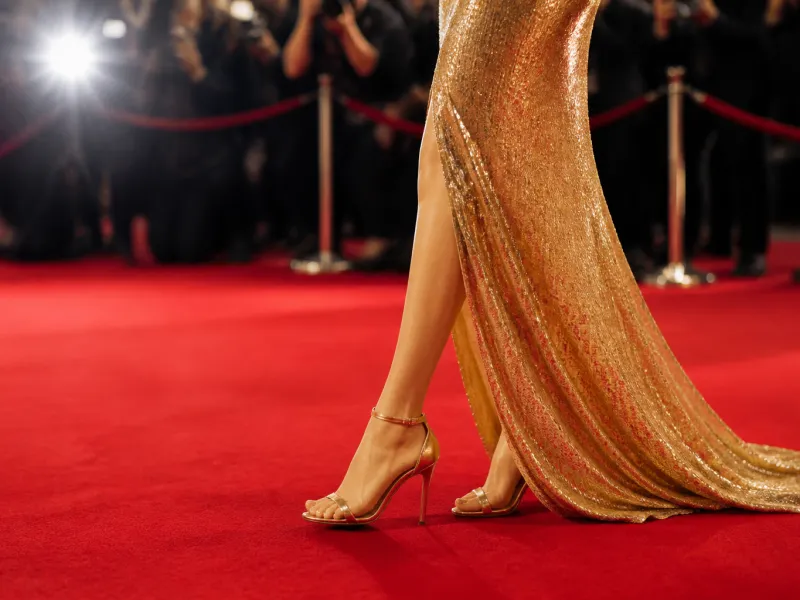
| Red carpet or photo call | Very limited, short soundbites | Quick reactions, event coverage |
Choosing the right format is part of a larger strategy tied to how celebrities build public image over time. A single interview rarely exists in isolation. It's usually one piece of a bigger plan.
04
Question Approval and Topic Restrictions
One of the least visible but most important parts of interview planning is the discussion around questions. While fully scripted interviews are less common than people assume, it is standard practice for a publicist to ask for a general outline of topics in advance.
This might include a list of subjects that are off limits, such as ongoing legal matters, family issues, or past controversies. Some outlets agree to these boundaries as a condition of access, especially for an exclusive interview that promises a major story in exchange for cooperation.
It's worth noting that very few reputable journalists agree to show a full list of exact questions ahead of time, since that would undermine the credibility of the interview. Topic guidance is far more common than word-for-word scripts.
05
The Role of the Entourage
Celebrities rarely show up to an interview alone. A publicist often attends in person or joins remotely, ready to step in if a question veers into sensitive territory. Depending on the situation, a manager, stylist, or assistant might also be present to handle logistics.
This support system exists for practical reasons. Interviews can be long, repetitive, and emotionally taxing, especially during a packed promotional schedule. Having a trusted team nearby helps keep things running smoothly and gives the celebrity someone to check in with between takes.
06
Setting the Scene: Location, Timing, and Format
Where and when an interview happens matters more than most people realize. A relaxed sit down at home feels very different from a formal studio setting, and both are chosen deliberately depending on the story being told.
Timing is just as strategic. Interviews are often scheduled around a project release date, an awards show, or a specific news cycle. A chat tied to a film release, for example, might be planned to run the same week the movie opens in theaters, maximizing visibility for everyone involved.
Lighting, camera angles, and even seating arrangements are considered carefully for televised interviews. These details might seem minor, but they shape how warm, approachable, or serious the final piece feels to viewers.
07
Media Tours and Press Junkets
When a major film, show, or album is about to launch, a single interview often isn't enough. This is where a full media tour comes in, packing multiple interviews into a short window of time across different cities or even countries.
A related format is the press junket, where journalists are invited to a single location, often a hotel, to interview a celebrity or an entire cast one after another. These sessions are usually tightly timed, sometimes just a few minutes per outlet, which explains why junket interviews can feel a bit repetitive if you watch several of them back to back.
Both formats are designed for efficiency. They let a celebrity reach dozens of outlets in a matter of days rather than spreading individual interviews out over weeks.
08
What Happens After the Interview
The work doesn't stop once the recording ends. Publicists often review footage or transcripts before publication, particularly for print pieces where quotes can be checked for accuracy. Television segments may go through an editing process where certain portions are trimmed for time or tone.
Clips are frequently shared on social media afterward to extend the life of the interview beyond its original broadcast or publication. A short, shareable moment can end up reaching far more people online than the full interview ever did on its original platform.
If a story is misquoted or taken out of context, publicists may issue a correction or clarification. This connects closely to the broader world of fact-checking celebrity rumors, since misunderstandings from interviews are a common source of entertainment news stories that later need correcting.
09
Why Some Interviews Feel More Honest Than Others
Audiences can usually sense when an interview feels authentic versus overly rehearsed. This often comes down to the relationship between the celebrity and the format they've chosen. A relaxed podcast setting with no strict time limit tends to produce more natural conversation than a two minute junket slot.
Trust between the celebrity's team and the interviewer also plays a role. Journalists who have built long standing relationships with publicists are sometimes given more freedom to ask tougher questions, simply because there's an established track record of fair treatment on both sides.
Frequently Asked Questions
Do celebrities really see interview questions in advance?
Topic areas are commonly shared ahead of time, especially sensitive subjects to avoid. Full scripted question lists are far less common, particularly with established news outlets that value editorial independence.
Why do some celebrities avoid certain interviewers?
A publicist may steer a celebrity away from interviewers known for confrontational questioning, especially if the client has had a difficult experience in the past or is trying to maintain a specific public image.
How long does it take to arrange a celebrity interview?
It varies widely. A quick red carpet soundbite might be arranged on the spot, while an in-depth magazine feature or television special can take weeks of negotiation and scheduling.
Why do junket interviews feel so short and similar?
Press junkets are designed to fit many journalists into a tight schedule, often just a few minutes each. Since every outlet asks about the same project, the questions and answers tend to overlap quite a bit.
What role does a publicist play during the actual interview?
A publicist often sits in or listens remotely, ready to redirect the conversation if a question strays into an off limits topic or becomes uncomfortable for the celebrity.
Explore
Read next
 Celebrity NewsA close look at how celebrity stories actually break, travel across platforms, and get checked for accuracy before you trust them.Red Carpet & StyleAn inside look at red carpet fashion, the stylists behind it, and how award season turns style into a full spectacle.
 Entertainment IndustryA practical look at the business, management, and image strategies working behind the scenes of every celebrity career.